TopicEducation & trainingAwarenessSafety and securityNew mobility formsPolicy makingTransport patterns & user needs
Description text
The rapid growth of e-scooters and e-bikes has transformed urban mobility, offering sustainable and convenient transport options. However, their widespread use has also introduced new challenges, particularly for older pedestrians who may experience safety risks and reduced comfort in public spaces.
Problem Identification
E-scooters and e-bikes are frequently left on pavements rather than in designated parking bays. This creates several issues:
Trip Hazards: Poorly parked vehicles obstruct walking paths, increasing the risk of falls.
Blocked Pavements: Cluttered pavements restrict movement, especially for those using mobility aids.
Reduced Aesthetic Appeal: Disorganized parking detracts from the visual quality of public spaces.
Unsafe Riding Practices: Riders often use pavements instead of roads or cycle lanes, traveling at high speeds.
Silent Operation: The near-silent nature of these vehicles can startle or intimidate older pedestrians, who may not hear them approaching.
Impact on Older Pedestrians
Increased risk of accidents and injuries.
Heightened anxiety and reduced confidence when walking in public areas.
Decreased accessibility and enjoyment of outdoor spaces.
Potential social isolation if individuals avoid walking due to safety concerns.N
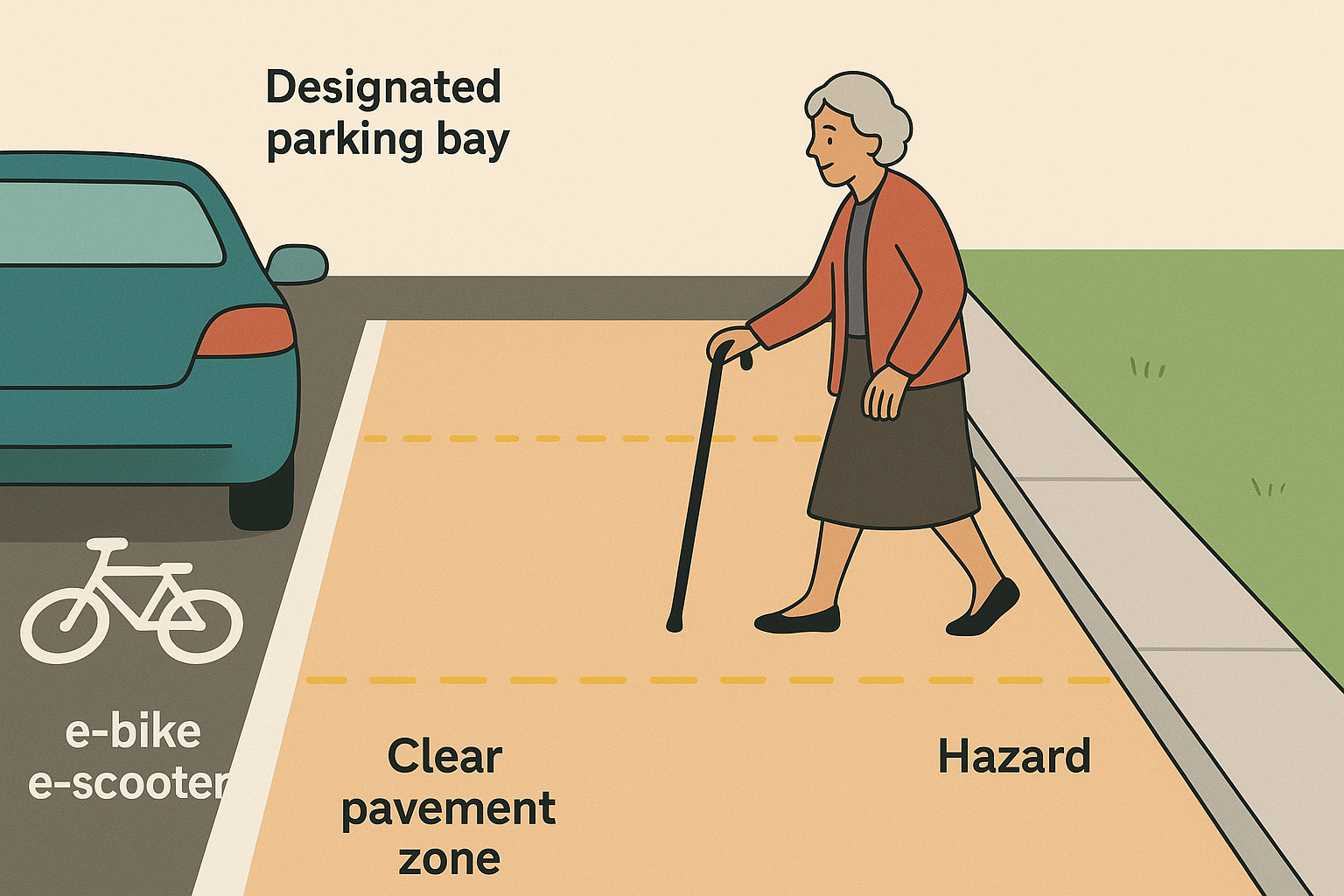
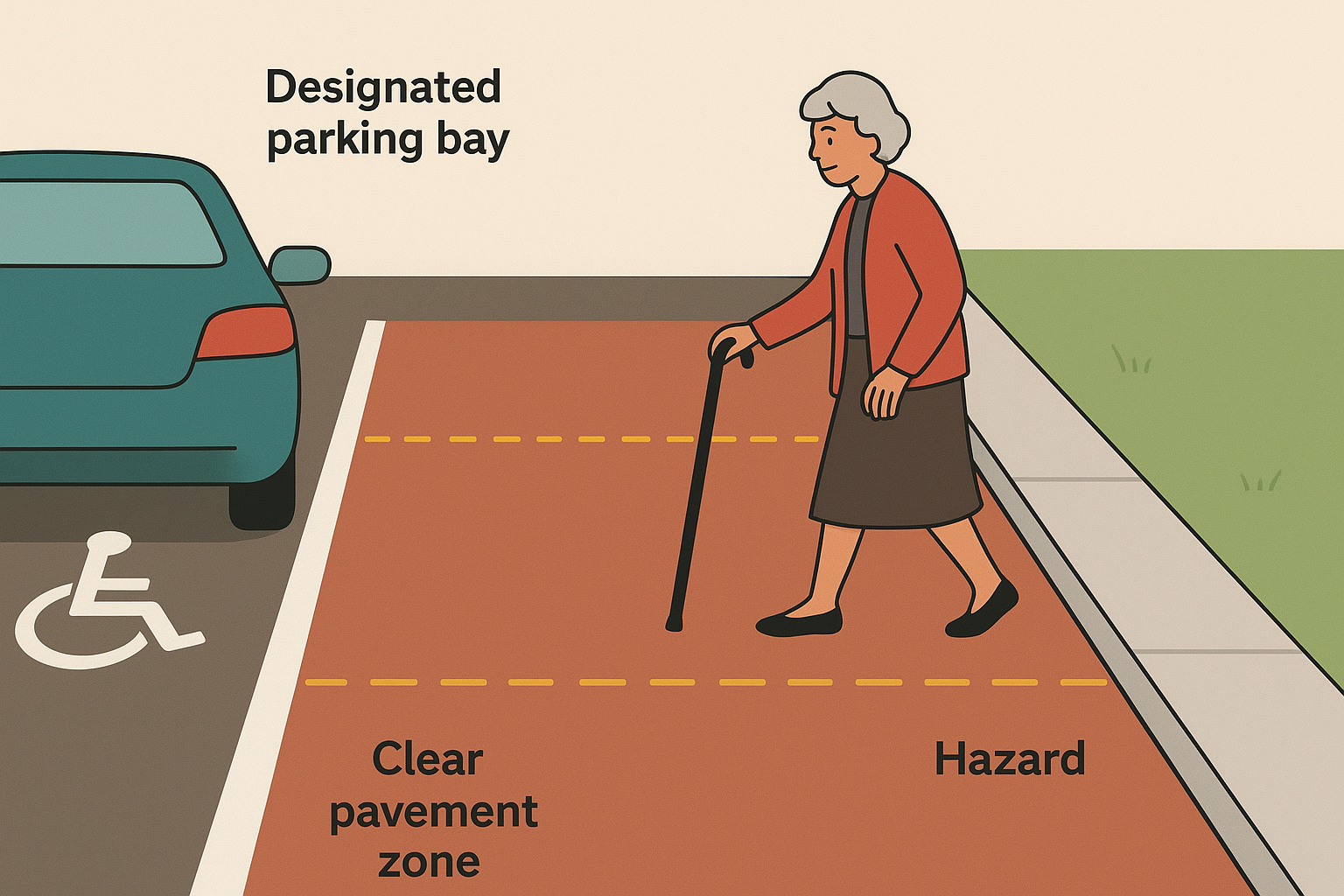
this solution appears to require that the bikes and wheelchairs are parked by the side of the road, behind a parked car. Would the car accessing or leaving the parking space actually see these? this may cause more damage to both cycles and cars
this does not address the issue of e-vehciles being ridden on pavements and scaring pedestrians either intentially or unintentionally. I don't think a sign would actually be a good deterrent.
I don't really understand the colur differences in the 2 diagams
I have used the DBG to turn this into an actionable design brief:
Design Brief: Visual Solution for E-Scooter and E-Bike Pavement Issues
Project Title: “Safe Streets for All: Organized Micro-Mobility Parking”
Objective:
Create a visual concept that demonstrates how designated parking bays and clear pavement zones can reduce hazards and improve accessibility for older pedestrians.
Key Challenges to Address
Trip Hazards: Prevent scooters/bikes from obstructing walking paths.
Blocked Pavements: Ensure clear routes for mobility aids and pedestrians.
Aesthetic Appeal: Maintain a clean, organized look in public spaces.
Safety: Discourage riding on pavements and highlight safe zones.
Silent Operation: Reduce anxiety for older pedestrians by clear separation of riding and walking areas.
Visual Solution Requirements
Designated Parking Bays:
Brightly marked zones for scooters and bikes.
Integrated signage and pavement markings.
Clear Pedestrian Path:
Wide, unobstructed walkway with tactile paving for visually impaired users.
Safety Messaging:
Icons and signs indicating “No Riding on Pavement.”
Inclusive Design:
Show older pedestrians walking confidently.
Include mobility aids (wheelchairs, walking sticks) in the scene.
Urban Context:
Place solution in a realistic street setting with greenery and benches for visual appeal.




11 months ago