TopicDesignSafety and securityTransport patterns & user needs
Description text
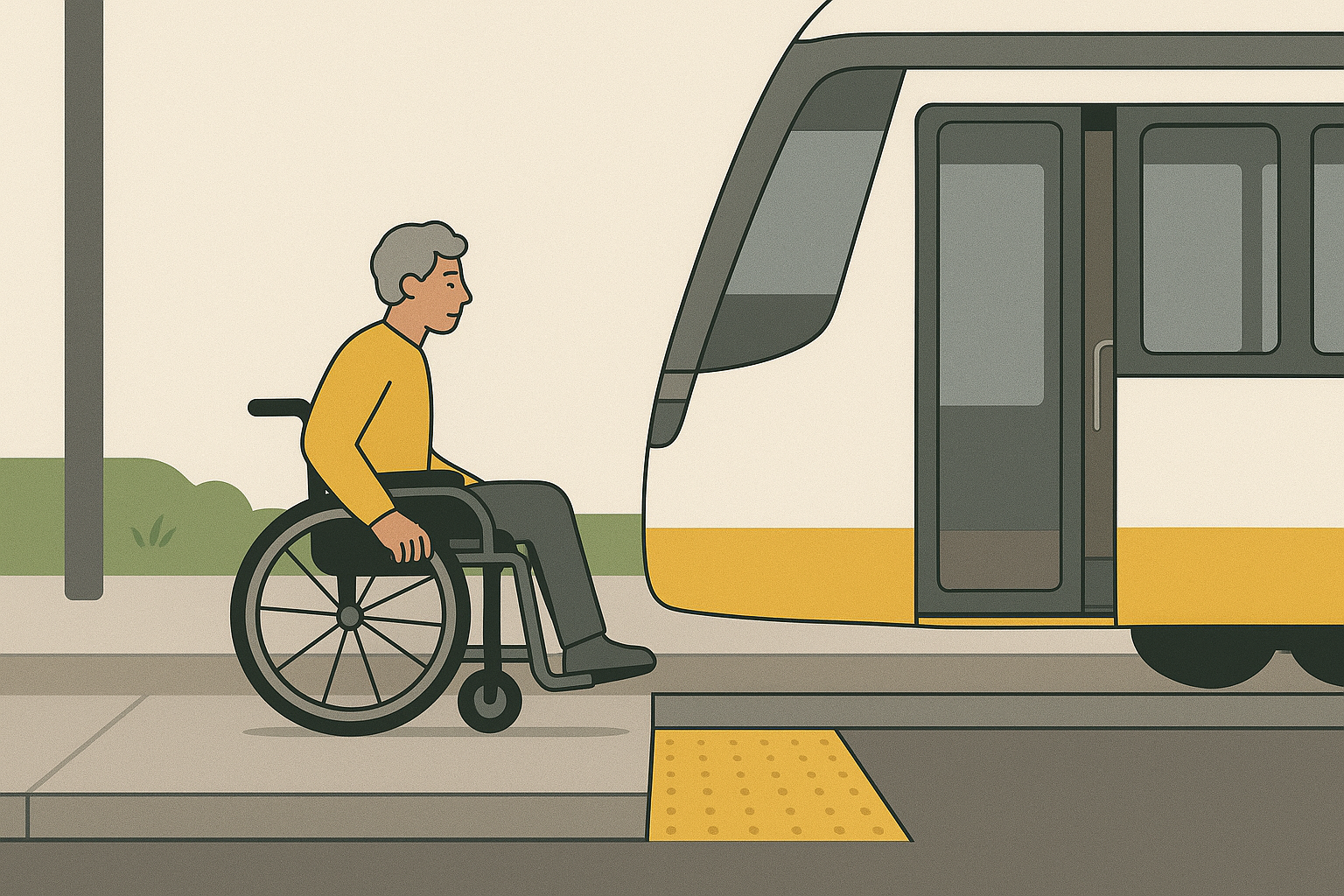
The inclusion of new tram services has made attempts to be accessible - with lower, or lowering platforms , and dropped kerbs. However, as shown in the image the small wheel of the wheelchair can drop between the tram and the curb.
Anyone pushing a wheelchair has to tilt the chair up and push it forward until the small wheels pass over the gap. Wheelchairs are 1) heavy 2) may be pushed by older partners who do not have the upper body strength to perform this action
Design Brief: Improving Tram Access for Wheelchair Users
The introduction of new tram services has included accessibility features such as lower or adjustable platforms and dropped kerbs. However, a key accessibility issue remains: the gap between the tram and the curb.
As shown in the reference image, the small front wheels of a wheelchair can drop into this gap, creating a significant safety and usability challenge. Currently, wheelchair users or their companions must tilt the chair backward and push it forward to cross the gap—an action that is difficult because:
Wheelchairs are heavy.
Many companions, particularly older individuals, may lack the upper body strength to perform this maneuver safely.
Design Objective:
Develop a solution that eliminates or bridges the gap between tram and curb, ensuring smooth, safe, and independent boarding for all wheelchair users without requiring lifting or tilting.


11 months ago