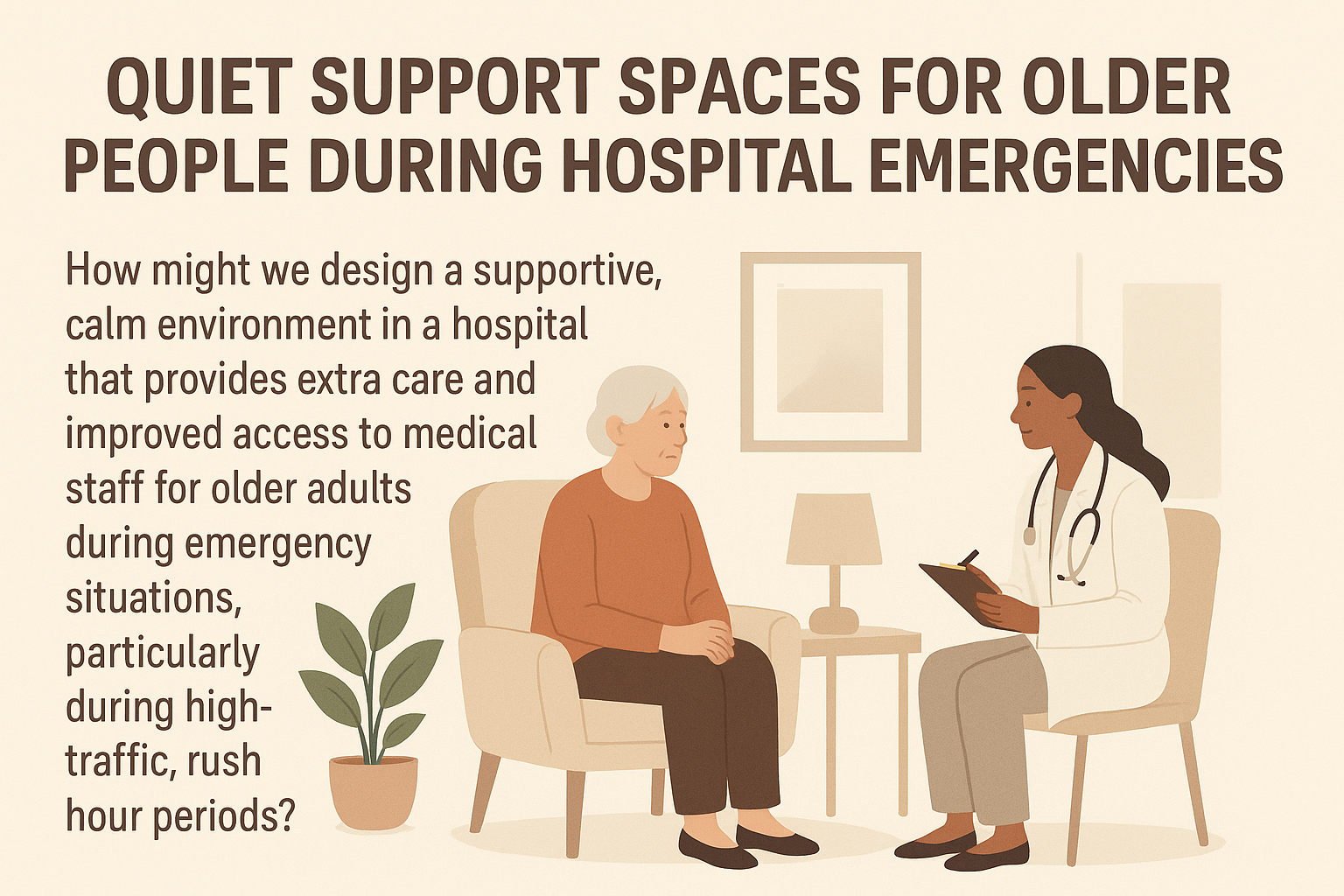
New Health Design Brief: Quiet Support Spaces for Older People During Hospital Emergencies
PAUL MAGEE
TopicEducation & trainingAwarenessDevelopmentDesignEmploymentSafety and securityWomen entrepreneurshipGender related statisticsWomen needs in transport New technologiesParticipation cultureMobility dataNew mobility formsShared modes of mobilityPolicy makingTransport patterns & user needs
Design Brief: Quiet Support Spaces for Older People During Hospital Emergencies
Project Aim:
To design a supportive, quiet environment within hospitals that offers extra care to older adults during emergency situations—particularly during high-traffic, rush hour periods.
Background & Opportunity:
Older individuals often face heightened stress and confusion during hospital emergencies, especially when hospitals are crowded and staff are stretched thin. There is a clear need for better support and access to medical staff during these critical times.
Design Focus:
Creation of quiet, safe spaces within hospitals that offer extra support and improved access to medical staff, helping older people feel more secure and informed.
Purpose & Outcomes:
Update hospital systems to better accommodate older adults.
Improve the patient experience during emergencies.
Provide an environment that facilitates calm, clarity, and communication.
Not sure how this would work. Would it require dedicates spaces and staff. How would the necessary staff be contacted/ would they have to absent themselves from the pool of staff.
Is the emergency situation - on the ward, during triage, or to provide reassurance if they come in with a patient
What training is currently provided to staff. is it adequate?
Is it a service design problem or a interior design issue?




1 month ago