Unusable 'accessible toilets' in cafes and public spaces
ANDREE WOODCOCK
TopicEducation & trainingDesignSafety and securityPolicy making
There is a lack of standardisation/regulation of 'accessible' toilets. This means that it cannot be taken forgranted that a cafe claiming to have 'accessible facilites' actually has ones that are fit for purpose and consider the dignity of the user. This means that the carer has to make a 'dry run' in advance of all trips. the following are examples of typical problems.
Narrow Doorways
Doors too narrow for standard wheelchairs (less than 850 mm wide).
Heavy or inward-opening doors that are difficult to maneuver while seated in a wheelchair.
Insufficient Turning Space
Toilets that don’t provide the required 1.5 m turning circle, making it impossible for wheelchair users to turn or position themselves properly.
Poorly Positioned Grab Rails
Grab rails placed too high, too low, or too far from the toilet.
Only one rail provided, limiting support for users who need assistance on both sides.
Obstructed Access
Sinks, bins, or baby-changing tables blocking the transfer space beside the toilet.
Cleaning equipment or storage items left in the accessible stall.
Inaccessible Fixtures
Flush handles, soap dispensers, or hand dryers placed too high or too far from reach.
Mirrors positioned for standing users only.
Poor Lighting and Signage
Dim lighting that makes navigation difficult.
Inadequate or confusing signage that doesn’t clearly indicate the accessible toilet.
No Emergency Assistance System
Missing or poorly placed emergency pull cords (e.g., tied up or out of reach from the floor).
Inappropriate Layout
Toilet positioned against the wrong wall, preventing side transfer from a wheelchair.
is there space for a carer? Do they have to be inside the toilet with its user?
Is there any element of privacy or dignity within the design. It is hard to tell from the floor plan
Is transfer on to the toilet available from both sides? A complaint from my user was that they are not usually accessible from both sides, without a usage diagram I can't imagine hwr the tre transfer would work.
where is the toilet roll postioned? in many public toilets this is poorly accessible. If squatting on the seat you have to reach backwards to access. Ideally it should be postioned in front of the seat, not half way behind it

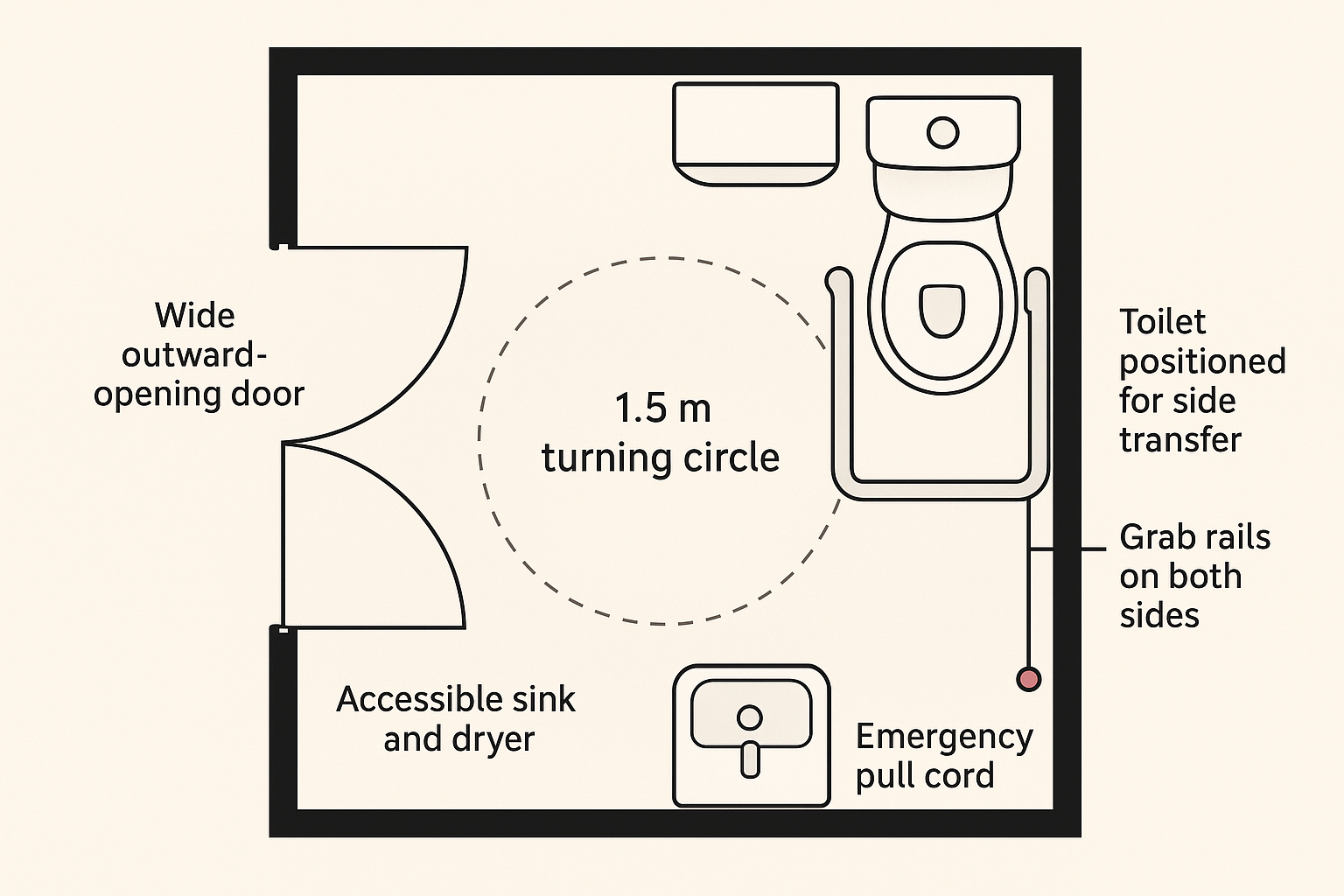 Generated by Chat GPT using the content above on 23rd Octover 2025.

11 months ago